
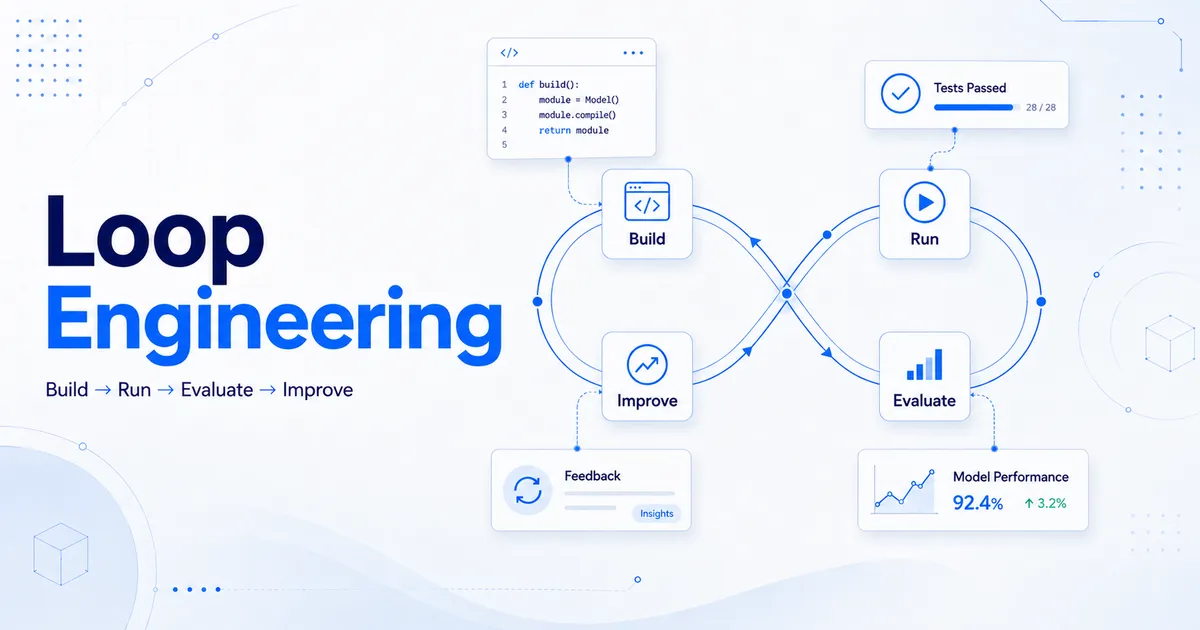
When Large Language Models (LLMs) first launched, interacting with them was a straightforward transaction: you typed a text prompt, and the model returned a text response. The problem with this single-shot approach is that you were entirely dependent on whatever the model spit out on the first try. If the response was wrong, hallucinated, or completely missed the mark, you had to manually iterate (tweaking your prompt, explaining your intent differently, and trying again and again) until you finally got the right output.
Welcome to the era of Loop Engineering.
As the name suggests, Loop Engineering moves away from single-shot answers and instead runs your prompt through a continuous, autonomous loop. When you give the system a task, the loop allows the AI to evaluate its own work, execute external tools, or even spin up a second LLM to verify the first model’s response. It can handle complex, multi-step business logic entirely on its own, without waiting for a human to manually write another prompt to fix its mistakes.
Designing an Agentic AI Loop
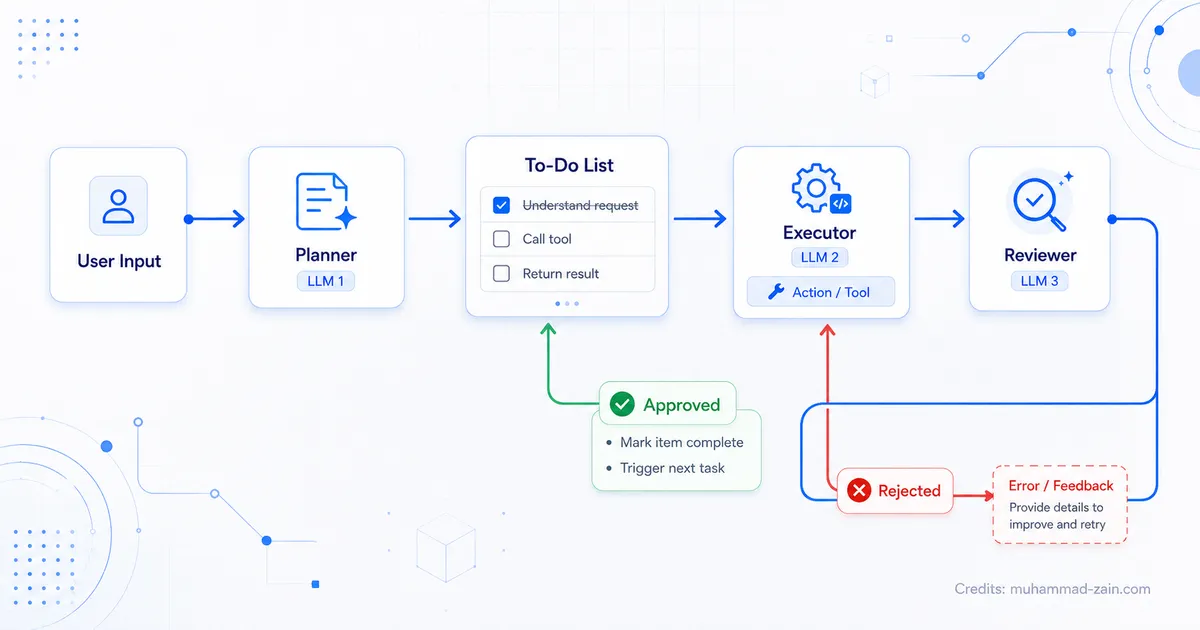
Let’s understand this by designing the actual logic for an Agentic Loop. Imagine you are building a system that breaks down a complex user prompt into a to-do list, where each turn of the loop handles one sub-task. Here is how you would lay out the LLM calls:
- LLM Call 1 (The Planner): First, you send the user’s prompt to an LLM and ask it to return a strict JSON array of sub-tasks. This is your initial to-do list.
- The
WhileLoop Starts: You enter a loop that runs as long as there are uncompleted tasks on the list. - LLM Call 2 (The Executor): Inside the loop, you send the current task to an LLM equipped with tools (like code execution or web search). It performs the action required for that specific task.
- LLM Call 3 (The Reviewer): Finally, you send the executor’s output to a separate “reviewer” LLM. If the reviewer approves the work, you check off the task, update the to-do list, and the loop moves to the next item. If the reviewer finds a flaw, the error is fed back into the next turn of the loop so the Executor can fix it.
This simple continuous loop turns an LLM from a static text generator into a true autonomous agent.
Preventing Infinite Loops
Because this system runs autonomously, there is always a risk that the AI gets stuck in an infinite loop, constantly failing a task and retrying forever. To prevent this and save on API costs, every loop needs a few safety brakes:
- Stop Conditions: The loop needs a clear definition of “done.” Once the final goal is met (or the to-do list is empty), the loop successfully stops and returns the result to the user.
- Max Iterations: You should always set a hard limit on how many times the loop can run (for example, a maximum of 5 attempts). If the agent fails 5 times, it stops and asks a human for help instead of burning through your budget.
- Timeouts: If a tool or API call takes too long to respond, a timeout ensures the system doesn’t wait forever. It forces the loop to throw an error or move on.